
Overview | The Worlds | Pathways | Magic | Divine & Other Beings | History | The Present Age
Divine & Other Beings
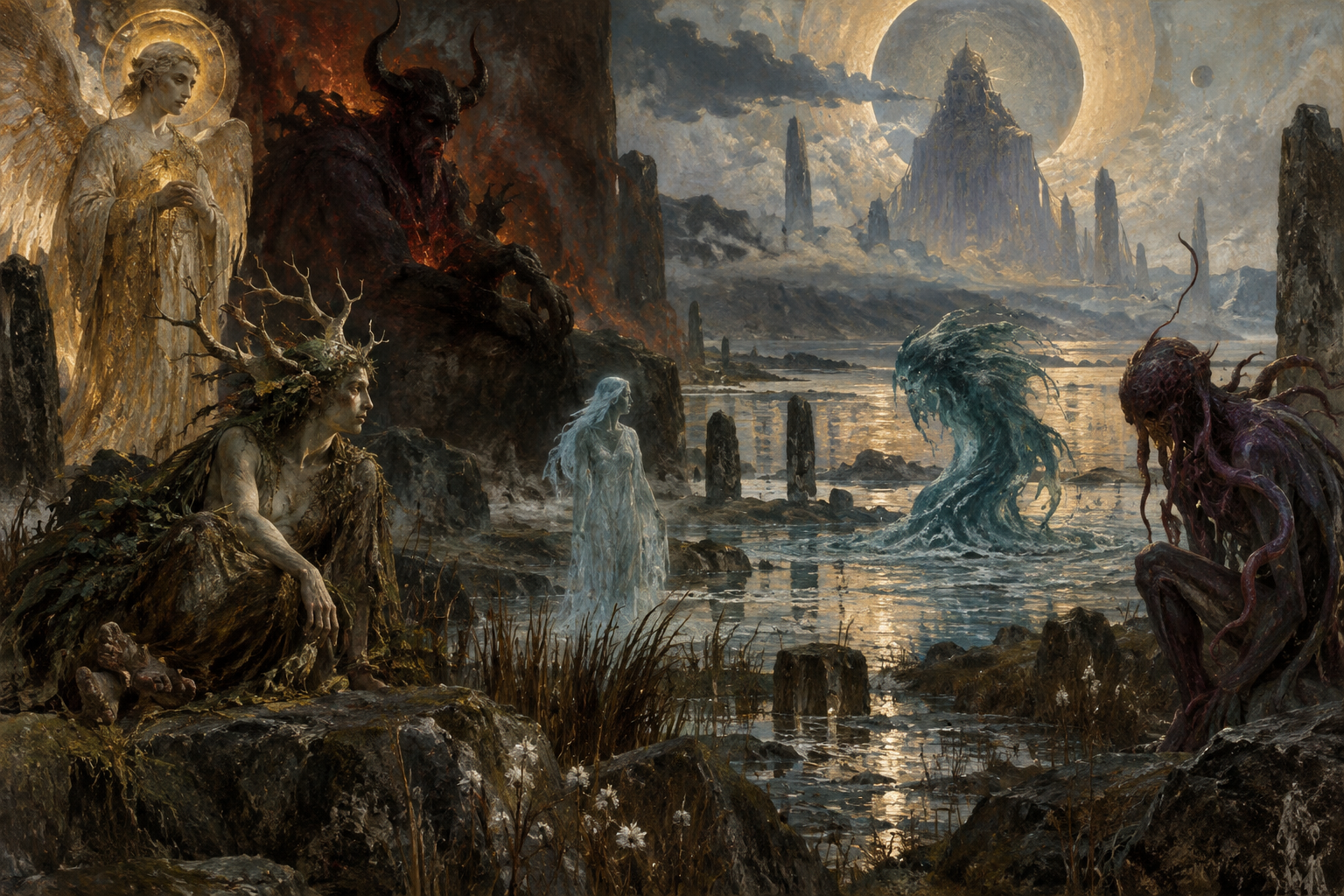
Ilixa contains gods, spirits, fiends, fey, celestials, ghosts and many other forms of intelligent supernatural life. Some have existed for longer than recorded civilisation. Others are born from places, memories, repeated human behaviour or magical events. Some inhabit planes adjoining the physical world. Some were once mortal. Some cannot yet be comfortably classified at all.
Different cultures give these beings different names, and those names are not always reliable. A creature described as a demon in one reality may be classified more precisely somewhere else. A local spirit may be worshipped as a god without actually possessing a divine nature. An entity presenting itself as an angel, ancestor or patron may not be telling the truth.
For stories, this uncertainty matters. For play, however, the Game Master should always be able to determine or decide what a being actually is.
Classifying a Being
Ilixa uses four pieces of information to describe supernatural beings behind the scenes.
| Classification | Meaning |
|---|---|
| Creature Type | The mechanical category used by the game: Fey, Fiend, Celestial, Elemental, Undead, Aberration, Humanoid and so on. |
| Nature | What kind of existence the being has: mortal, spirit, divine being, embodied supernatural being, transformed being, created intelligence and similar descriptions. |
| Origin | Where and how the being arose: a physical world, an associated plane, a particular place, a magical event, another reality, or something unknown. |
| Role or Status | What the being does or represents: god, patron, guardian, ancestor, servant, ruler, trickster, messenger and so forth. |
These categories deliberately overlap.
A god is not necessarily a particular creature type. A patron is not a species. A spirit might mechanically be Fey, Elemental, Undead or something else. An Archfey remains Fey even if people worship it. A demon remains a Fiend even if it becomes powerful enough to rule kingdoms.
This allows the setting to remain precise without forcing every culture in Ilixa to use the same terminology.
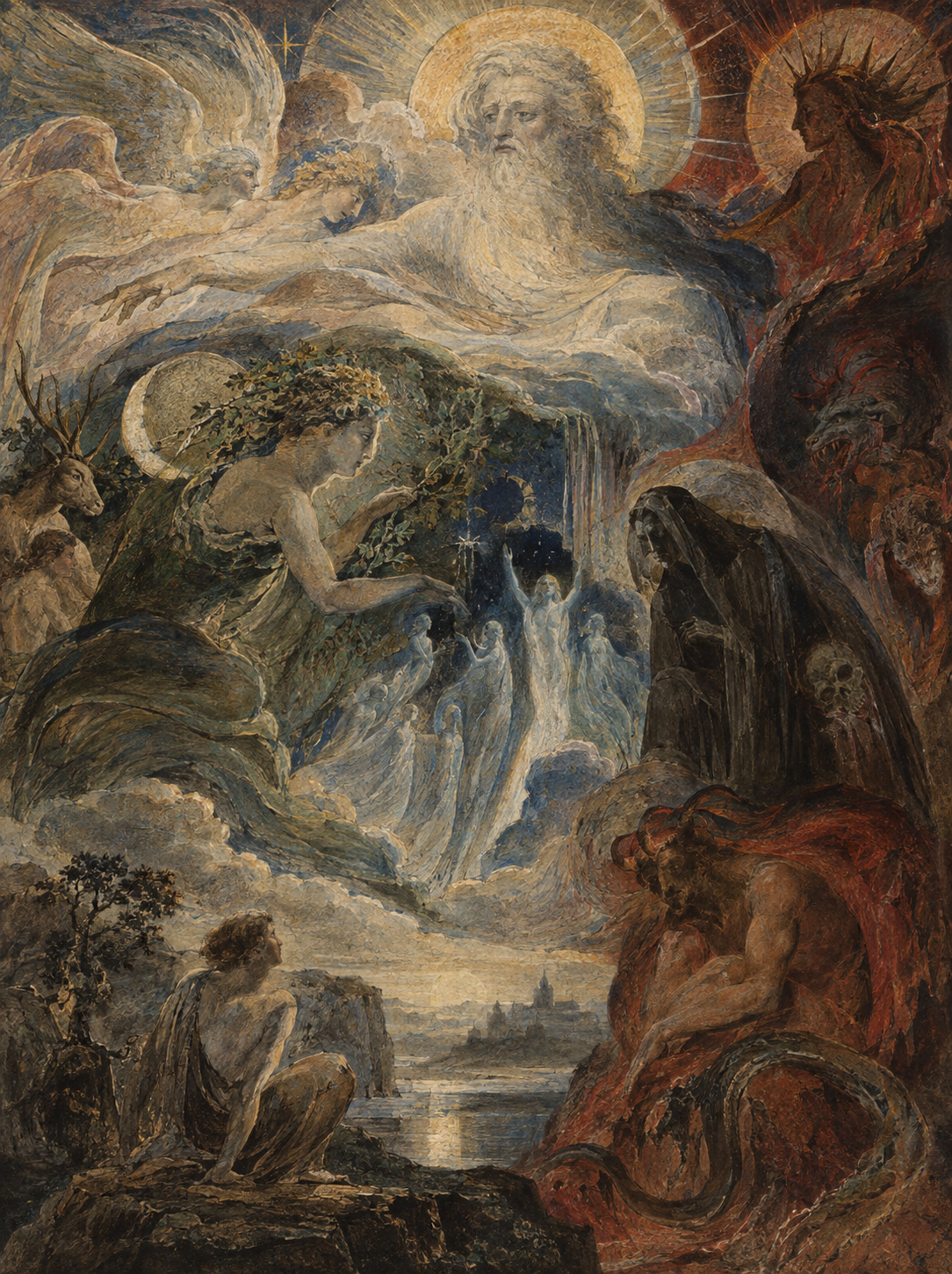
Gods
Gods are beings of genuinely divine significance.
There is no single known species called a god, and no universally accepted threshold beyond which a powerful creature automatically becomes one. Divine beings differ enormously in origin, scale, behaviour and relationship with mortals.
Some are associated with particular peoples, landscapes or worlds. Others have influence across entire planes. Some appear to have existed before the cultures that worship them. Others may have changed, risen or transformed over time.
A being worshipped as a god is not necessarily divine, and a genuine divine being does not necessarily require worship.
Gods can grant power, intervene in the world, create or alter living things, establish sacred relationships and leave lasting marks upon civilisation. The beings associated with the ancient planting of Drift organisms around Halcyon Bay, for example, belong within this wider divine history. Exactly what those beings were, where they came from and how they travelled remains a separate question.
Divinity also does not imply omnipotence. Gods can have limits, rivals, territories, vulnerabilities and histories of their own.
Spirits
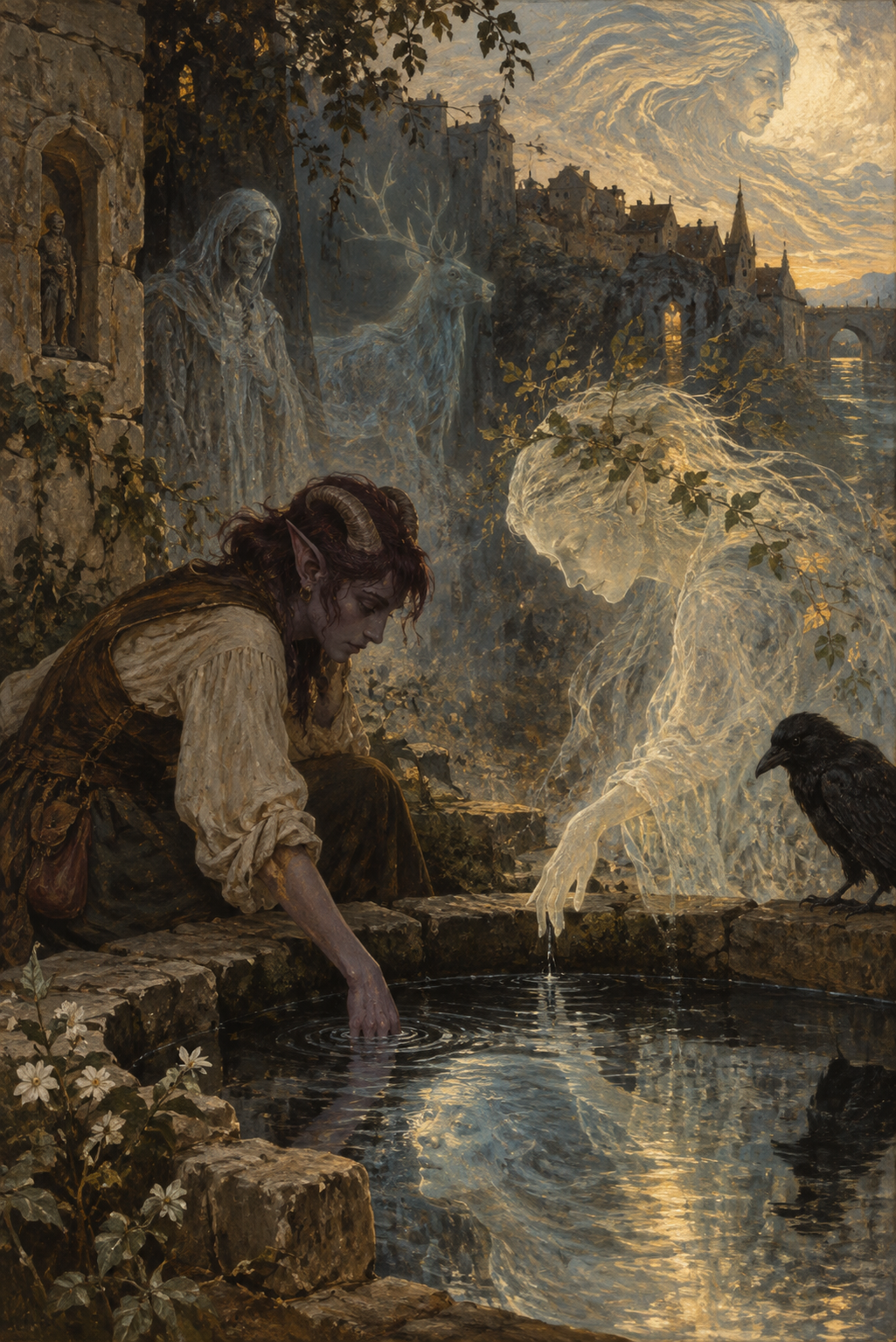
Spirits are non-mortal consciousnesses whose existence is primarily magical rather than biological.
They can arise in many different ways.
Some are connected to rivers, woods, houses, roads, animals, weather or particular objects. Others emerge from human behaviour: routines repeated across generations, accumulated memories, patterns of emotion, stories repeatedly told or places subjected to the same actions again and again.
This is especially important within the reality explored in Stray Spirits. Its Spirit World is closely connected to physical places, and spirits can form around the repeated lives and habits of the people who inhabit them. A station platform, school corridor, old house, footpath or neighbourhood may gradually acquire a supernatural life of its own.
A spirit does not have to be a ghost, nor does every spirit belong to one common species.
One spirit might mechanically be Fey. Another might be Elemental. A spirit associated with the dead might be Undead. Their shared designation as spirits describes their nature, not necessarily their Creature Type.
Some spirits are barely more intelligent than instinct. Others possess personalities, memories, desires and centuries of experience.
Fey
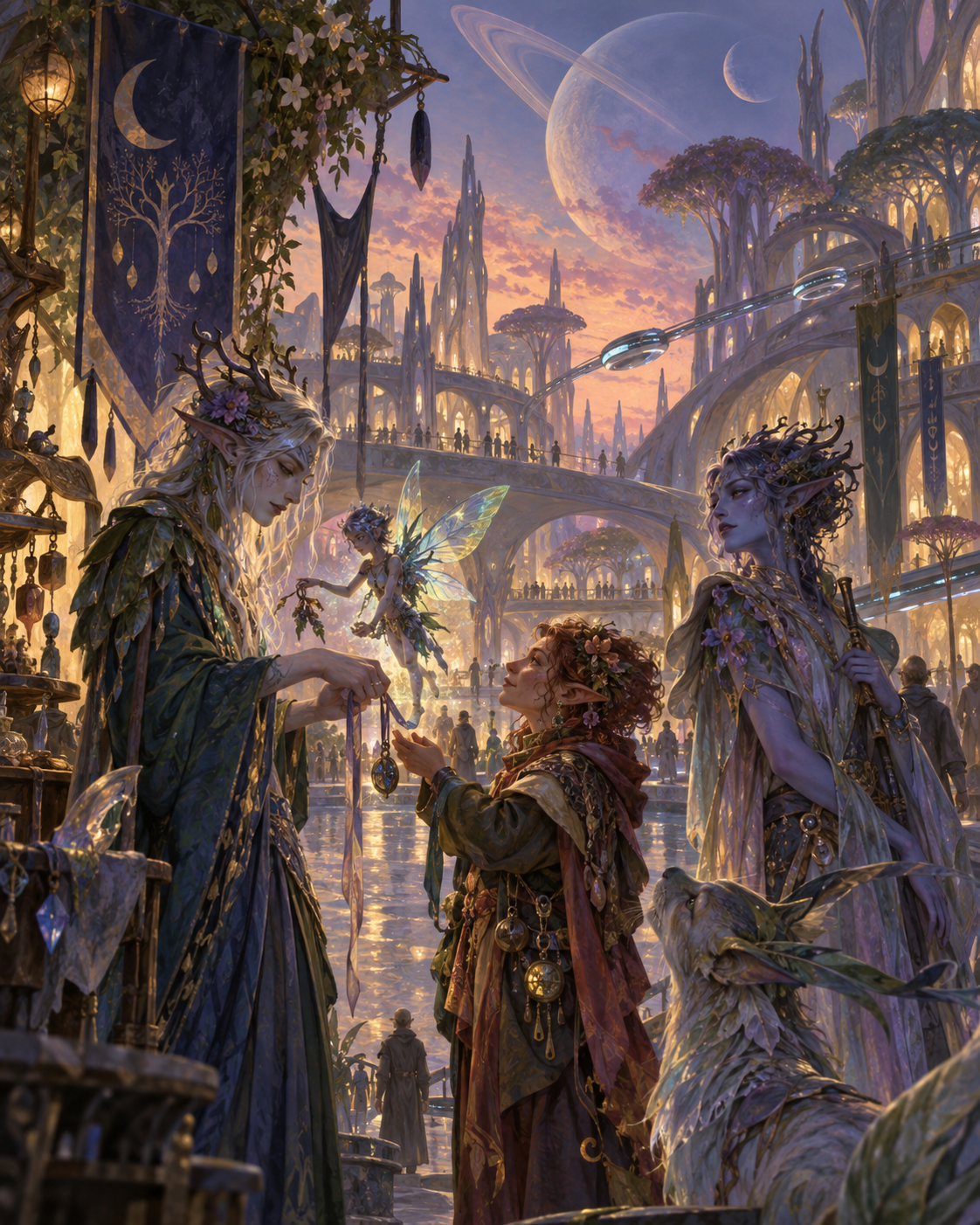
Fey are supernatural beings associated with magical, natural and liminal aspects of reality, and with the planes or environments in which those forces become especially pronounced.
They range enormously in form and power, from small local entities to ancient and immensely powerful Archfey. Some are closely bound to particular places or natural phenomena, while others belong to complex societies with their own histories, territories and traditions.
Fey frequently overlap with what cultures call spirits. A forest guardian might be Fey by Creature Type and a spirit by Nature, while another Fey may be a fully embodied being with its own physical existence and ancestry. The categories are therefore related, but not interchangeable.
Their behaviour and values do not necessarily follow human assumptions. Names, promises, hospitality, exchanges, stories, memory, territory and obligation can possess unusual significance within some Fey traditions. Their actions may appear generous, cruel, playful or arbitrary to mortals while following rules that make perfect sense to them.
As elsewhere in Ilixa, Fey is an objective Creature Type for the purposes of play, even when the people encountering a Fey being use an entirely different name for it.
Celestials
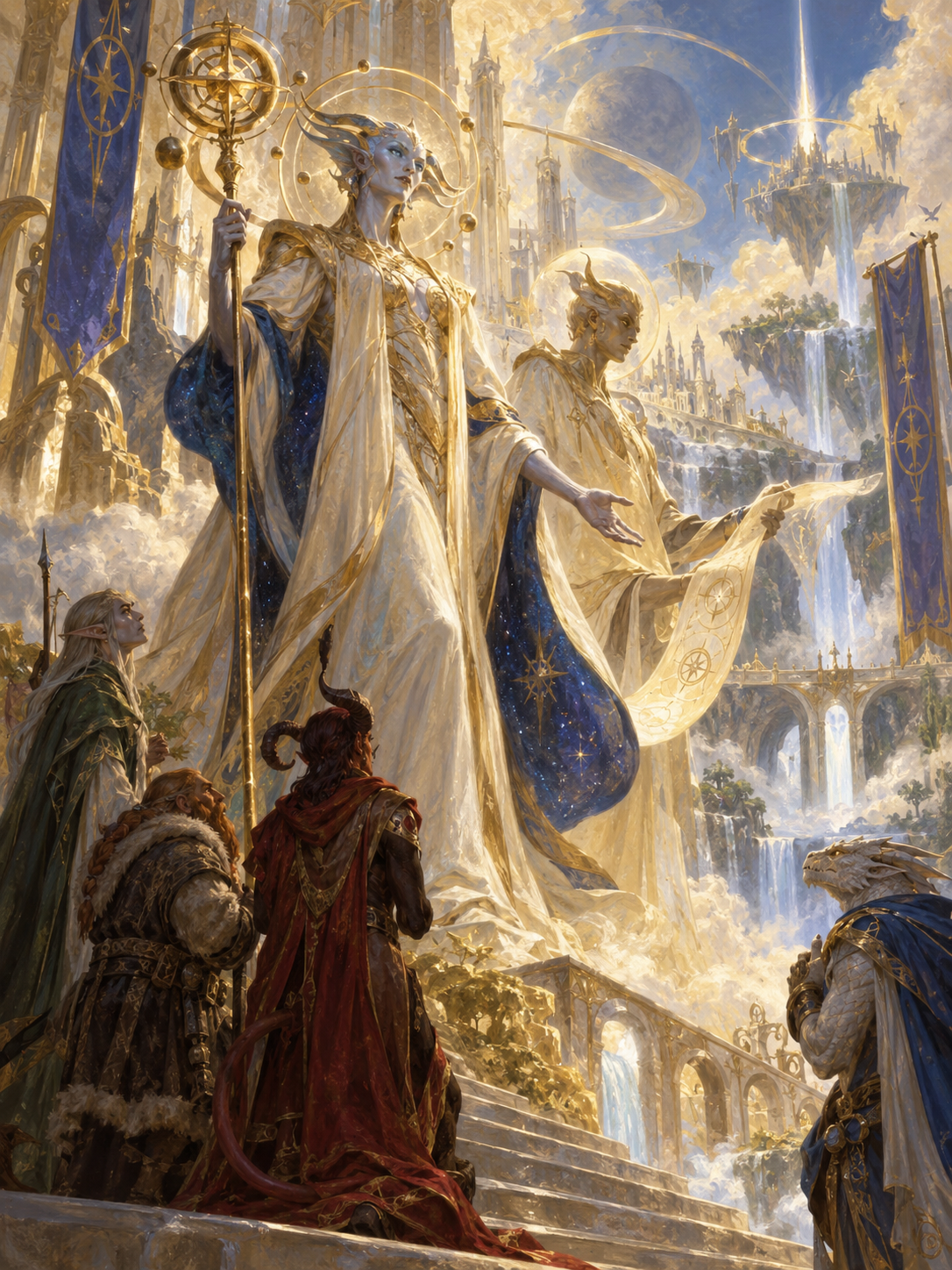
Celestials are beings connected to divine, transcendent or sacred planes and powers.
Angelic beings, divine messengers, sacred guardians and other creatures of this kind commonly fall into this category.
A Celestial is not automatically a god. Most are not.
Some serve divine beings. Some act independently. A sufficiently powerful Celestial might become the subject of worship, but worship alone does not alter its underlying Creature Type.
Nor does being Celestial mean that a being must be morally perfect. Celestial describes its supernatural nature and origin, not an absolute guarantee of behaviour.
Fiends
Fiends are supernatural beings associated with hostile, corruptive, destructive or infernal forms of existence.
Within this broad category are more specific kinds of being, including demons and devils.
These distinctions are real for the Game Master even when characters use the terms imprecisely. Someone confronted by a terrifying entity may call it a demon simply because that is the nearest word available to them. They may be correct, partly correct or completely wrong.
Demons and devils can therefore retain their familiar D&D identities. Demons may represent particularly destructive or chaotic kinds of Fiend, while devils may belong to more ordered, hierarchical or contractual traditions.
Other Fiends need fit neither category.
A cruel spirit is not automatically a Fiend. Neither is a dangerous Fey, hostile god or murderous magical creature. Fiend describes what a being fundamentally is, not simply whether it behaves badly.
Bargains and Patrons
Powerful beings sometimes enter into pacts with mortals, offering magical knowledge, abilities, protection or access in exchange for service, loyalty, promises or other forms of payment.
Such patrons can take many forms, including Fiends, Archfey, Celestials, gods, ancient spirits, Undead intelligences, Aberrations or stranger entities unique to a particular reality. The nature of the bargain depends as much on the being involved as on the terms agreed.
These relationships provide the basis for Warlock-style magic in Ilixa. A pact may grant direct power, reveal forbidden techniques, awaken abilities already present in the recipient, or provide continued access to a source of magic.
Patrons are not necessarily truthful. They may conceal their identity, misrepresent the source of their power, manipulate the meaning of an agreement or allow a mortal to misunderstand exactly what has been promised.
Elemental Beings
Elementals are beings whose existence is fundamentally connected to physical or magical forces.
Fire, water, air and earth are common examples, but Ilixan traditions do not necessarily agree that reality divides neatly into four classical elements. Other cultures may recognise storms, ice, metal, darkness, light, volcanic forces, oceans or stranger states as distinct elemental principles.
Many Elementals are also understood culturally as spirits.
Again, both descriptions can be true:
Creature Type: Elemental. Nature: Spirit.
This distinction is useful whenever a story treats an elemental entity as a personality attached to a place or force rather than merely as a monster.
Souls, Ghosts and the Dead
Death does not always produce the same result.
A dead person's consciousness may pass into some form of afterlife. Under unusual circumstances it may remain accessible to the living. A person may become trapped, transformed or magically anchored. Powerful magic may preserve or restore them.
But an apparition resembling a dead person is not necessarily that person.
It could be the continuing consciousness of the deceased, an Undead spirit, a magical imprint created by their life, a memory embedded in a place, or another being imitating them.
This distinction matters particularly in ghost stories.
The existence of ghosts therefore confirms that some forms of consciousness can persist beyond biological death, but it does not mean that every haunting represents a complete surviving human soul.
Undead
Undead are beings in which death and continued existence have become magically entangled.
They include creatures such as vampires, liches, revenants, wraiths, skeletons and other forms of magically sustained or transformed existence.
Not all Undead retain the same relationship with the person who died.
A reanimated corpse may retain almost nothing. A vampire may preserve personality and memory. A lich may deliberately maintain its consciousness through magical means. A ghost may genuinely be the remaining spirit of a deceased person.
A soul existing naturally beyond death is not automatically Undead. Undeath describes a particular disruption, continuation or transformation of death rather than every possible form of afterlife.
Aberrations and Stranger Beings
Some beings do not fit comfortably into familiar supernatural systems.
Aberrations are fundamentally strange entities whose bodies, minds or metaphysical nature lie outside the patterns normally encountered by mortal societies.
They are not simply monsters that look unusual.
Many represent genuinely alien forms of existence. They may originate in obscure planes, ancient magical environments, extreme experiments or regions of reality whose rules differ radically from ordinary experience.
Ilixa also contains beings that remain genuinely unclassified.
Not knowing what something is does not automatically make it an Aberration. Sometimes it simply means that the Game Master—or the setting itself—has not yet revealed enough information.
This category is particularly useful for rupture stories. Something emerging into Ravenlake does not need to be identified immediately as a demon, spirit or Fey. It may belong to an ecology nobody in Avara has ever encountered.
Beings of the Planes
Many supernatural beings originate in planes associated with a particular Ilixan reality.
A physical world may therefore coexist with Fey realms, spiritual regions, divine domains, infernal planes, elemental environments, afterlives and other layers of existence.
These are not automatically separate Ilixan realities.
A demon travelling from an infernal plane into the physical world may have crossed between planes without crossing the deeper boundary that separates one reality from another.
This distinction is essential.
Ordinary planar travel, summoning and banishment can therefore operate without bypassing the ancient Pathways.
Beings Between Realities
Crossing between Ilixan realities is much more difficult.
A god, demon, Fey or spirit does not automatically possess the ability to travel freely from one reality to another simply because it is supernatural.
Most are bound to the reality in which they originated and to its associated planes.
Some beings crossed through the ancient Pathways before the Severing. Some have been carried through ruptures. Others may have been stranded when routes closed.
A very small number of entities may possess other means of crossing the deeper boundaries between realities, but such ability is exceptional and should never be assumed from Creature Type alone.
This means the same gods, spirits and fiends do not have to exist everywhere in Ilixa.
One reality may possess entire supernatural ecologies unknown to another.
The Severing
The Severing fragmented knowledge of supernatural beings just as thoroughly as it fragmented knowledge of magic and the Pathways.
Some worlds retained long relationships with gods, spirits, Fey or other entities. Others lost most of what they once knew.
Avara is one of the severed realities. Its people can investigate beings found within their own world and associated planes, study manifestations and ruptures, examine surviving historical records and encounter entities that occasionally cross into their world. They do not possess a comprehensive taxonomy of the supernatural populations of Ilixa.
An entity well understood elsewhere may therefore be completely mysterious on Avara.
This difference in knowledge is important. The Game Master can know exactly what a creature is while the characters remain uncertain.
Morality
Creature Type does not determine moral character.
A Celestial is not automatically incapable of cruelty. A Fey is not inherently benevolent or malicious. Spirits can protect, ignore, manipulate or attack mortals. Gods can disagree violently with one another. Intelligent Undead may retain complicated personalities.
Fiends are more strongly associated with destructive and corruptive supernatural forces, but even here personality, motivation and individual behaviour can matter.
Ilixa treats supernatural beings as beings, not merely as alignment labels.
What something is can influence its instincts and nature without reducing every individual of that kind to the same personality.
Using Divine and Other Beings in D&D
Ilixa is designed so that standard D&D creatures can usually be used without rewriting their mechanics.
Their Creature Type remains the mechanical classification used by the rules. If a creature is mechanically Fey, Fiend, Celestial, Elemental, Undead, Aberration or another recognised type, abilities that interact with that type continue to work normally.
Ilixa then adds the information needed to place that creature within the setting.
When introducing a supernatural being, the Game Master should know four things: its Creature Type, its Nature, its Origin and its Role or Status.
For example, a being might mechanically be Fey, while its Nature is Spirit, its Origin is a place shaped by generations of repeated human behaviour, and its Role is guardian of that place.
Another might be Fiend (Devil), an extraplanar supernatural being, originating in an infernal plane and acting as a patron and bargainer.
A third could be a Celestial, possess a Divine Nature, and hold the Status of god.
The characters themselves do not need access to this information.
They may call a creature a demon because they are frightened. They may believe a powerful spirit is a god. They may accept a patron's claim to be an ancestor or angel. Investigation, religion, magical scholarship and experience determine what they actually learn.
This allows familiar D&D creatures and mechanics to function normally while preserving one of the central principles of Ilixa:
the Game Master can know what is true even when the people living inside the world do not.